Can Neopentyl Glycol and Pentaerythritol Be Mixed
Can Neopentyl Glycol and Pentaerythritol Be Mixed?
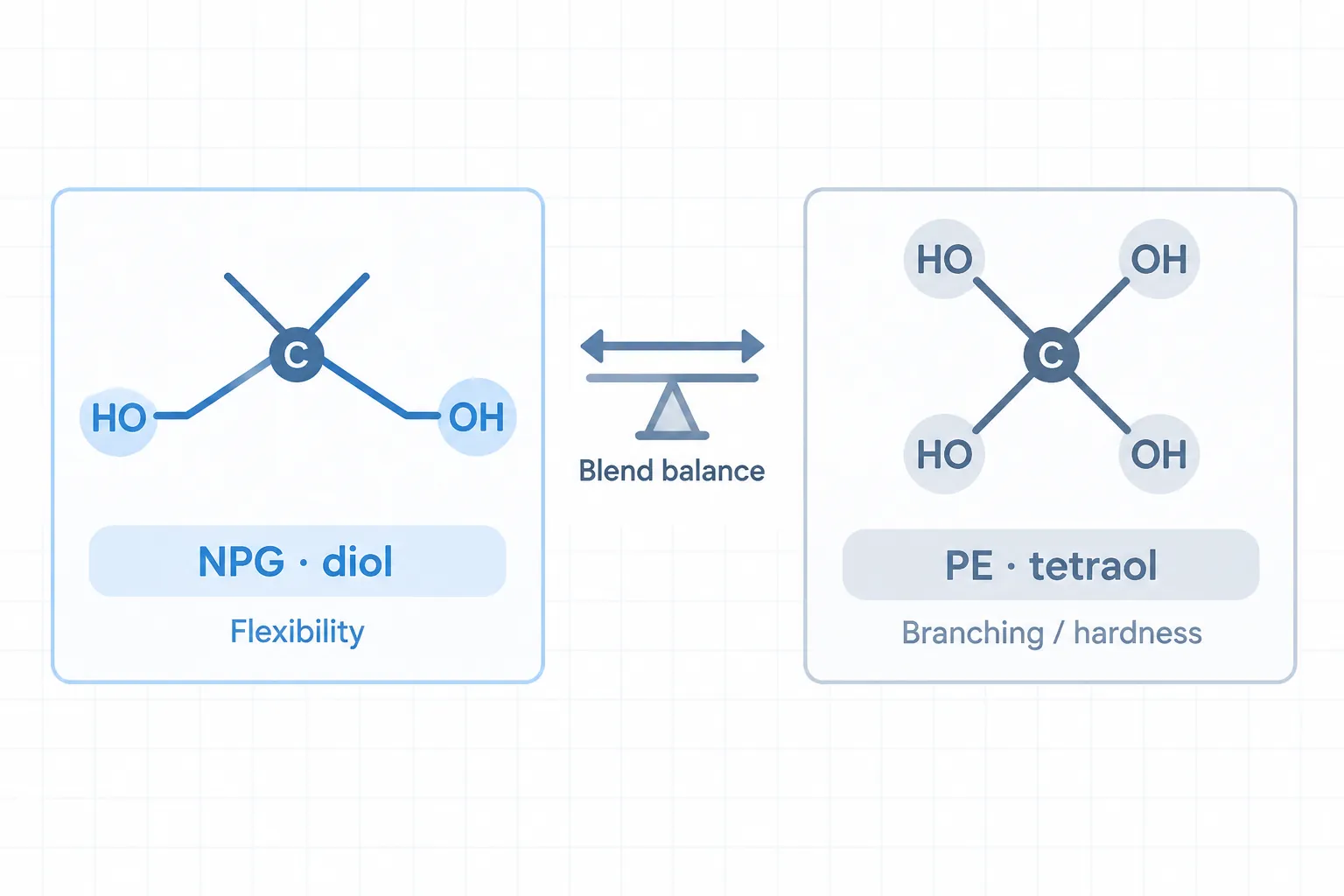
Yes, neopentyl glycol (NPG) and pentaerythritol (PE) can be combined in some resin formulations, but the result depends on the formulation design and processing conditions. NPG is a diol, while PE is a tetrafunctional polyol, so PE can increase branching and crosslinking potential. The blend should therefore be assessed for compatibility, viscosity, gelation risk, and the required balance of hardness and flexibility before production.
What Each Polyol Brings to the Resin

When I compare neopentyl glycol (NPG) and pentaerythritol (PE), I treat them as complementary polyols rather than direct substitutes. NPG is a diol that supports a more flexible resin structure, while PE is a tetrafunctional polyol that increases branching and can raise hardness and crosslinking density. The right balance depends on the required resin and film properties.
Neopentyl Glycol: Diol for Flexibility and Durability
Neopentyl glycol, or NPG, has two hydroxyl groups and is widely used as a diol for polyester and alkyd resin systems. In a formulation, it can help provide a useful balance of flexibility, durability, hydrolytic stability, and weather resistance. Its lower functionality also makes it easier to control resin branching when a less rigid structure is needed.
For formulators, NPG is often considered when the final coating or resin needs to avoid excessive brittleness. It can support smooth processing and help balance the harder contribution of multifunctional polyols such as pentaerythritol.
Pentaerythritol: Tetrafunctional Branching and Hardness
Pentaerythritol is a tetrafunctional polyol with four hydroxyl groups. These additional reactive sites can create more branching in the resin structure, which may increase hardness, rigidity, and crosslinking density. This makes PE useful when the formulation needs a stronger, harder resin network.
However, a higher PE contribution also requires closer control of formulation balance and processing. Excessive branching can increase viscosity and raise the risk of gelation, especially when the hydroxyl functionality and reaction progress are not carefully managed. In practice, I use PE to add structure and hardness while relying on NPG to help maintain flexibility and durability.
Where Formulators Commonly Use NPG + PE Together
I consider neopentyl glycol (NPG) and pentaerythritol (PE) together when a resin design needs to balance processing behavior with the final film’s hardness and flexibility. The right combination depends on the resin type, hydroxyl functionality, target viscosity, and required crosslinking density. Always confirm the blend through controlled laboratory trials before production.
Short- and medium-oil alkyd resins
In short- and medium-oil alkyd resins, NPG can be used as a diol, while pentaerythritol provides higher functionality for branching. This combination helps formulators adjust the balance between flexibility, hardness, and resin structure.
- NPG: supports a more flexible polyester backbone.
- PE: increases branching and can raise crosslinking density.
- Combined system: requires careful control to limit excessive viscosity or gelation risk.
The useful ratio is formulation-specific. I recommend checking the hydroxyl balance, acid value, viscosity, and film performance rather than selecting a fixed NPG-to-PE ratio for every alkyd system.
Saturated polyesters and powder-coating binders
NPG and pentaerythritol may also be evaluated in saturated polyester resins used for powder-coating binders. NPG contributes diol functionality, while PE introduces tetrafunctional branching that can affect hardness and crosslinking density.
For these systems, I focus on the relationship between polyol functionality, melt behavior, viscosity, and the required coating performance. A higher PE level may increase branching, but it can also make processing more demanding. Small-scale testing helps confirm whether the NPG and PE combination provides the required balance for the target powder-coating formulation.
Mixing Rules: Functionality, Ratio, and Process Checks
When deciding whether neopentyl glycol and pentaerythritol can be mixed, I focus on hydroxyl functionality, stoichiometric balance, and the target resin properties. NPG is a diol, while pentaerythritol is a tetrafunctional polyol. Combining them can change branching, viscosity, crosslinking density, and the final balance between flexibility and hardness.
Watch Gelation, Viscosity, and Acid Value
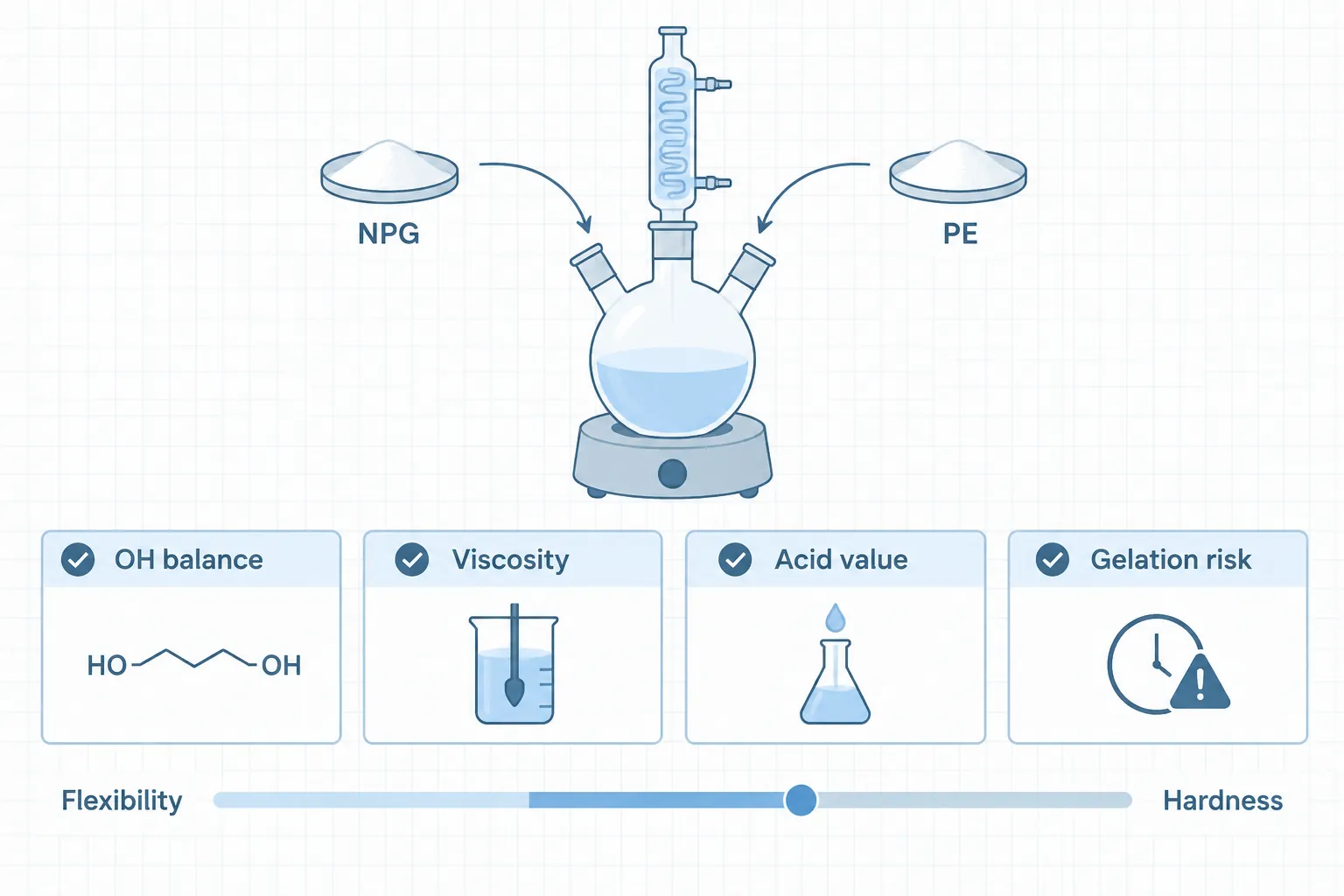
A high pentaerythritol level can increase branching and raise the risk of gelation during polyester or alkyd resin manufacture. It may also increase melt or resin viscosity, making processing more difficult. I therefore check the following during development:
- Hydroxyl balance: Calculate the contribution of both polyols instead of treating them as interchangeable.
- Functionality: Account for the higher branching potential of the pentaerythritol tetrafunctional polyol.
- Viscosity: Track changes throughout the reaction and adjust the formulation before the resin becomes difficult to handle.
- Acid value: Monitor the reaction endpoint and confirm that the resin meets the intended specification.
- Gelation risk: Use controlled formulation and processing conditions, especially when the pentaerythritol content is high.
There is no universal NPG-to-pentaerythritol ratio. The right level depends on the resin type, required branching, target hydroxyl value, and intended end use. I recommend confirming the balance through small-scale trials before moving to production.
Balance Hardness vs. Flexibility for the End Film
The main formulation trade-off is simple: NPG supports flexibility, durability, hydrolysis resistance, and weather resistance, while pentaerythritol increases branching, hardness, and crosslinking density. Using more pentaerythritol may improve film hardness and chemical resistance, but excessive branching can reduce flexibility and increase viscosity.
For an NPG and PE system, I evaluate:
- Film hardness and flexibility
- Weather and hydrolysis resistance
- Resin viscosity and processability
- Required crosslinking density
- Final coating or resin application
My practical approach is to begin with a controlled polyol blend, measure the resin properties, and then adjust the NPG and pentaerythritol balance. If a lower branching effect is needed, trimethylolpropane may also be considered as an alternative triol, depending on the formulation goals.
When Not to Force a Blend
I do not force a blend of neopentyl glycol and pentaerythritol when the resin process cannot handle the difference in hydroxyl functionality. NPG is a diol, while pentaerythritol is a tetrafunctional polyol. Adding too much PE can raise branching, viscosity, and gelation risk, making the resin harder to process and control.
A combined system may also be unsuitable when the finished coating needs maximum flexibility, low viscosity, or a simple linear polyester structure. In these cases, the extra branching from pentaerythritol can move the resin away from the required performance balance.
Before using NPG and PE together, I check:
- Target film properties: Excess PE may favor hardness and crosslinking over flexibility.
- Hydroxyl functionality: The polyol balance must match the resin design and curing system.
- Acid value and reaction control: Poor stoichiometric control can affect final resin quality.
- Viscosity and gelation risk: High PE content may narrow the safe processing window.
- Melting and mixing behavior: Both materials must be incorporated evenly under the selected process conditions.
- End-use requirements: A resin for a flexible coating may need a different balance from one designed for higher hardness or chemical resistance.
If a tetrafunctional polyol creates too much branching, a lower-functionality formulation or an alternative such as trimethylolpropane may be easier to control. The right choice depends on the required hardness, flexibility, weather resistance, hydrolysis resistance, and processing behavior.
Practical Buying Tips for NPG and Pentaerythritol
When I buy neopentyl glycol NPG diol for polyester or pentaerythritol tetrafunctional polyol, I first match the material to the resin process and final film requirements. NPG and PE do not serve the same role, so the selected grade should support the required balance of flexibility, hardness, branching, and crosslinking density.
Before placing an order, I check:
- Material identity: Confirm whether the product is neopentyl glycol, pentaerythritol, or dipentaerythritol.
- Application fit: State whether the material is intended for alkyd resin, saturated polyester, powder coating, or another formulation.
- Quality documentation: Request the current specification sheet, certificate of analysis, and safety documentation.
- Batch consistency: Confirm that key quality values are controlled consistently from batch to batch.
- Packaging and shipping: Verify the package format, labelling, storage requirements, and export documentation before shipment.
- Trial quantities: Test a representative sample before approving regular supply, especially when changing the NPG-to-PE balance.
For global B2B purchasing, clear communication matters as much as the material itself. I provide the intended resin type, target performance, required quantity, destination, and compliance needs at the quotation stage. This helps reduce misunderstandings and supports a more reliable selection of NPG and pentaerythritol for production.
How Hengyou Chemical Supplies Both Grades
Hengyou Chemical is an Anyang-based chemical supplier serving global B2B buyers of neopentyl glycol (NPG), pentaerythritol (PE), dipentaerythritol, and related coating and resin raw materials. We support formulators who need a reliable source for both an NPG diol for polyester and a pentaerythritol tetrafunctional polyol.
For purchasing teams, the key is matching each material to the required resin process and final performance. NPG is commonly selected for polyester systems where hydrolysis resistance, weather resistance, and flexibility matter. Pentaerythritol is used when greater branching, hardness, and crosslinking density are needed.
- Material selection: Choose NPG, pentaerythritol, or a combined polyol system based on the target resin and film properties.
- Quality review: Confirm the applicable grade, specification, packaging, and documentation before placing an order.
- Application fit: Check suitability for alkyd resins, saturated polyester powder-coating binders, or other coating and resin uses.
- Global procurement: Align order details and shipping requirements with the needs of your destination market.
By sourcing NPG and pentaerythritol from one chemical supplier, buyers can simplify procurement for resin projects that require a controlled balance between flexibility, hardness, branching, and durability.