How to Prevent Pentaerythritol Caking in Storage
Why Does Pentaerythritol Cake in Storage?
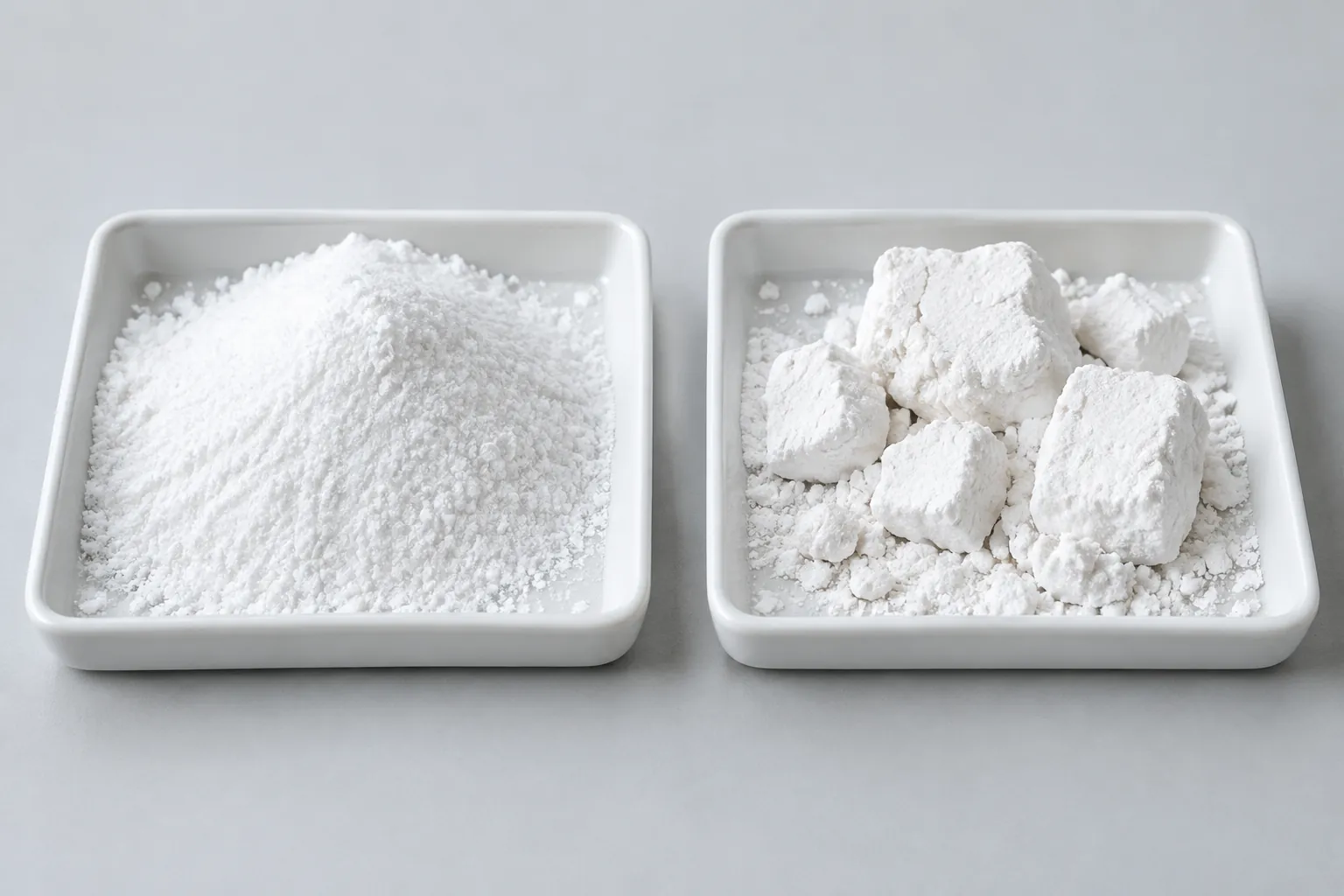
Pentaerythritol can lose its free-flowing form when moisture, pressure, and temperature changes act on the powder during storage or transport. This process, known as PE powder agglomeration, creates soft lumps or hard, compacted blocks that are more difficult to discharge, weigh, and feed into production.
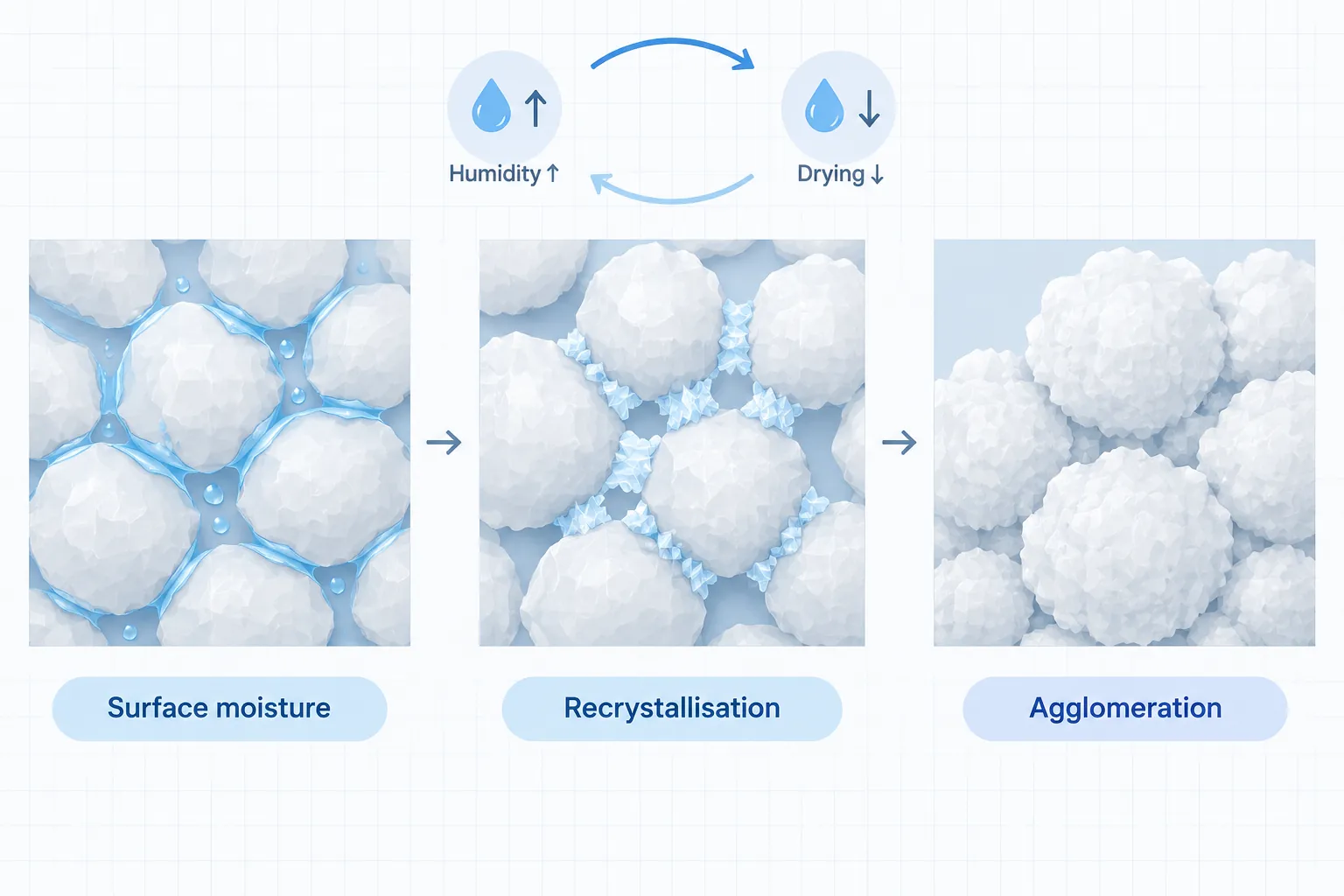
Humidity cycling and surface moisture bridging
Pentaerythritol is sensitive to moisture absorption. When warehouse humidity rises, moisture can collect on particle surfaces and partially dissolve the material. As the surface dries, the dissolved material recrystallises and forms solid bridges between neighbouring particles. Repeated humidity cycling can therefore turn a free-flowing crystalline powder into bagged pentaerythritol lumps.
Temperature fluctuations can intensify this effect by encouraging condensation and recrystallisation. Even when the product does not appear visibly wet, repeated moisture movement through the package may gradually increase agglomeration. This is why stable warehouse conditions and effective moisture barrier packaging are central to efforts to prevent pentaerythritol caking.
Stacking pressure and damaged packaging
Heavy or prolonged stacking places continuous pressure on the lower bags. Under this load, particles may undergo plastic deformation, bringing them into closer contact and increasing the formation of compacted masses. The risk is greater when pallets are stacked too high or when big bags and other packages carry excessive weight for long periods.
Damaged bags create an additional route for moisture entry. Torn woven packaging, poorly sealed liners, or compromised closures can expose the powder to humid air and accelerate caking. For reliable pentaerythritol storage, inspect bags and pallets for damage, avoid excessive stacking pressure, and protect the product from conditions that promote moisture absorption and crystal bridging.
How to Prevent Pentaerythritol Caking
Keep the warehouse cool and dry
To prevent pentaerythritol caking, I recommend controlling the warehouse environment before the material is unloaded. Keep the warehouse relative humidity below 50% and maintain a stable temperature between 10°C and 30°C. Avoid short-term temperature changes greater than approximately 5°C, because repeated thermal cycling can encourage moisture movement and crystal bridging within the powder.
Use suitable HVAC or dehumidification equipment where local weather conditions make the warehouse warm or humid. This is especially important for global shipments that move between different climates. A dry, stable storage area helps protect the free-flowing nature of crystalline pentaerythritol and reduces PE powder agglomeration during storage.
Use sealed bags, liners, and sensible pallet practice
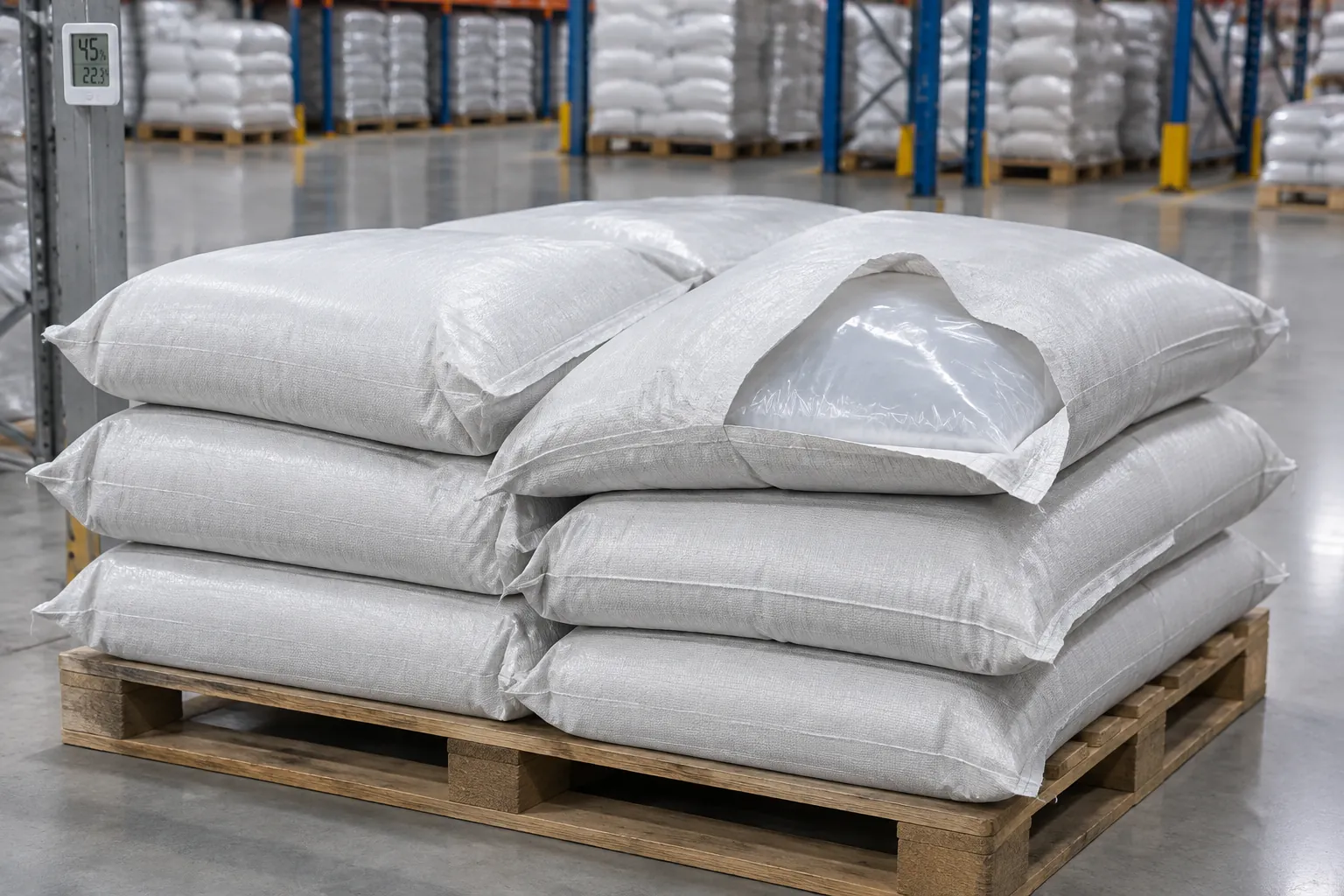
Moisture barrier packaging is one of the most practical ways to prevent pentaerythritol caking. For bagged pentaerythritol, use strong outer bags with a properly sealed inner liner. Suitable packaging may include:
- Heavy-duty woven polypropylene outer bags
- Sealed LDPE or LLDPE inner liners of approximately 80–100 microns
- Aluminum foil or other moisture-vapor barriers
- Vacuum-sealed bags or integrated desiccant packs where appropriate
Inspect each bag for punctures, open seals, moisture marks, or other packaging damage before placing it into storage. A damaged liner can allow moisture to reach the powder, even when the outside of the bag appears intact.
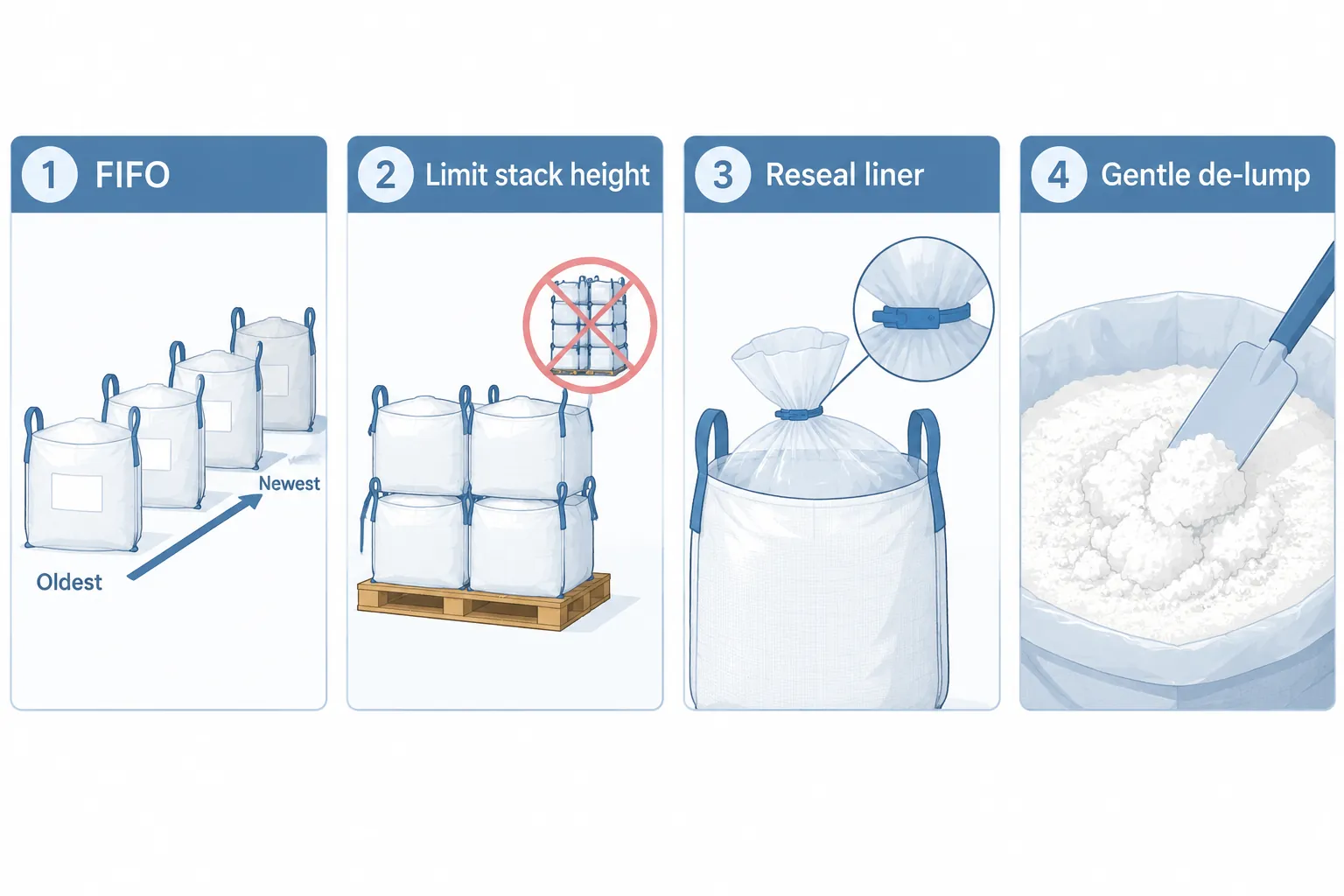
Control stacking pressure as well. When block-stacking, do not exceed two pallets high; unstacked storage or pallet racking is preferable where space and equipment allow. Depending on the bag construction, keep the pallet-base load within approximately 1,000–1,200 kg. Excessive weight can compress the lower bags and promote compaction, particularly during long storage periods.
Handling habits that keep powder free-flowing
Good handling practices help maintain product quality from receipt through production. Keep pallets level, dry, and protected from direct exposure to humid air. Avoid leaving opened bags exposed in the warehouse, and reseal partially used packaging promptly with a moisture-resistant closure.
Use a clear First-In, First-Out (FIFO) system so older lots are consumed before newer stock. This limits storage duration and reduces the chance of dead-weight consolidation inside the bags. Record the lot number and receipt date when material arrives, then keep the inventory arranged so the oldest suitable lot is accessible.
Before transferring pentaerythritol to production equipment, check the bags and powder condition. If minor lumps are present, handle the material according to the plant’s approved de-lumping procedure rather than forcing compacted material into conveying or charging equipment. These simple controls help reduce blocked systems, uneven feeding, and delays in alkyd resin raw material handling.
If Pentaerythritol Has Already Caked, Can You Still Use It?
When lumps are only a physical handling issue
Caked pentaerythritol is not automatically unusable. If the material has formed dry lumps but has not been exposed to damaging moisture, excessive heat, or contaminated packaging, the main problem may be physical handling rather than immediate product failure. The powder may still retain its intended quality, but it will no longer behave as a free-flowing crystalline powder.
I recommend inspecting the bags, inner liners, and visible material before use. Small, dry agglomerates may be broken up during controlled de-lumping. This can help restore more consistent handling and reduce problems such as blocked transfer equipment or uneven charging into an alkyd resin process.
When to retest or reject the lot
Retesting is appropriate when caking is severe, the material has been stored for a long period, or the packaging shows signs of moisture entry. A lot should be checked against the applicable purchase and process specifications before it is released for production.
- Retest the lot when caking is present but the packaging remains intact and the material appears clean and dry.
- Hold the lot when bags are torn, liners are open, or moisture exposure is suspected.
- Reject or segregate the lot when testing shows that the material no longer meets the required quality or processing standards.
Do not judge bagged pentaerythritol lumps by appearance alone. Moisture absorption can create surface bridges and harder crystal bridges, while storage pressure can compact the powder further. These changes may affect feeding, mixing, and downstream resin production.
Practical steps before charging a resin cook
Before charging caked pentaerythritol into a resin cook, I recommend a controlled preparation routine:
- Move the affected bags to a clean, dry area and inspect the packaging and inner liner.
- Separate visibly damaged or moisture-affected bags from material that remains protected.
- Break up suitable dry lumps using an appropriate de-lumping method for the plant.
- Confirm that the prepared powder is reasonably uniform before charging.
- Follow the site’s normal quality checks and resin-processing requirements.
Avoid forcing large, hard blocks directly into the process. This can lead to uneven charging, clogged handling equipment, and inconsistent contact with other raw materials. When the lot cannot be restored to a suitable physical condition or fails the required checks, it should not be used in production.
Is Pentaerythritol a Hazardous Chemical for Sea Freight?
What typical industry SDS/IMDG practice indicates
Pentaerythritol sea freight requirements should not be decided by appearance or product name alone. The available storage guidance focuses on preventing moisture uptake, pressure-related compaction, and temperature cycling. It does not establish a universal IMDG classification for every grade, package, or shipment. For this reason, I treat the product’s current SDS and shipping documents as the primary reference before booking ocean transport.
Good transport preparation still matters even when the main concern is pentaerythritol caking. Use sound, moisture-resistant packaging, protect bags from damage, and avoid excessive stacking pressure during loading and storage. These steps help preserve a free-flowing crystalline powder and reduce the risk of bagged pentaerythritol lumps after a long voyage.
Always verify your lot SDS and the carrier’s rules
Before shipping, check the following details for the specific lot:
- Current SDS: Confirm the transport information supplied for that grade and package.
- Carrier requirements: Ask the ocean carrier or freight forwarder which documents and declarations are required.
- Packaging condition: Inspect sealed bags, liners, closures, and pallet stability before loading.
- Route requirements: Confirm any destination, port, or local handling rules that may apply.
For global B2B shipments, I recommend verifying the pentaerythritol SDS transport information before the purchase is finalized, not after the cargo reaches the port. This simple check helps prevent documentation delays, rejected bookings, and avoidable packaging problems during sea freight.
Buying Tip: Ask About Packaging Integrity and Lot Freshness
When I source pentaerythritol for resin, coating, or lubricant production, I confirm the packaging before I compare supply options. Good packaging helps protect the free-flowing crystalline powder from moisture during storage and transport.
- Ask about the moisture barrier: Confirm whether the bags use sealed PE inner liners, aluminum barrier layers, or another moisture-resistant design.
- Check packaging condition: Bags should be properly sealed and free from visible damage that could allow moisture to enter.
- Confirm lot freshness: Request the packing or dispatch information and ask how FIFO is managed to limit prolonged storage.
- Review storage conditions: Confirm that the material was kept in a dry warehouse with relative humidity below 50% and a stable temperature between 10°C and 30°C.
- Align the packing format with your handling system: Consider how bagged pentaerythritol will be stacked, moved, and opened at your site to reduce pressure-related PE powder agglomeration.
These checks help reduce the risk of receiving caked material and support more reliable handling when the pentaerythritol is charged into an alkyd resin or other industrial process.
How Hengyou Chemical Supports Stable, Ship-Ready Supply
At Hengyou Chemical, I focus on practical controls that help keep pentaerythritol stable and free-flowing during storage and transport. Moisture barrier packaging, dry warehouse conditions, stable temperatures, careful pallet handling, and FIFO stock rotation all help reduce PE powder agglomeration and bagged pentaerythritol lumps.
- Moisture control: Use sealed packaging with suitable PE or aluminum barrier liners and desiccant protection where required.
- Warehouse guidance: Keep relative humidity below 50% and maintain a stable temperature between 10°C and 30°C.
- Pallet management: Limit stacking pressure, use pallet racking where practical, and avoid excessive dead weight on lower bags.
- Inventory rotation: Apply FIFO practices to reduce extended storage and preserve powder flow.
- Transport review: Check the product SDS and carrier requirements before arranging sea freight, including CAS 115-77-5 shipping documentation where applicable.
This approach helps global B2B buyers reduce handling problems, protect alkyd resin raw material quality, and receive pentaerythritol in a condition suited to storage and downstream processing.