Pentaerythritol 95 Percent vs 98 Percent Which Grade to Buy
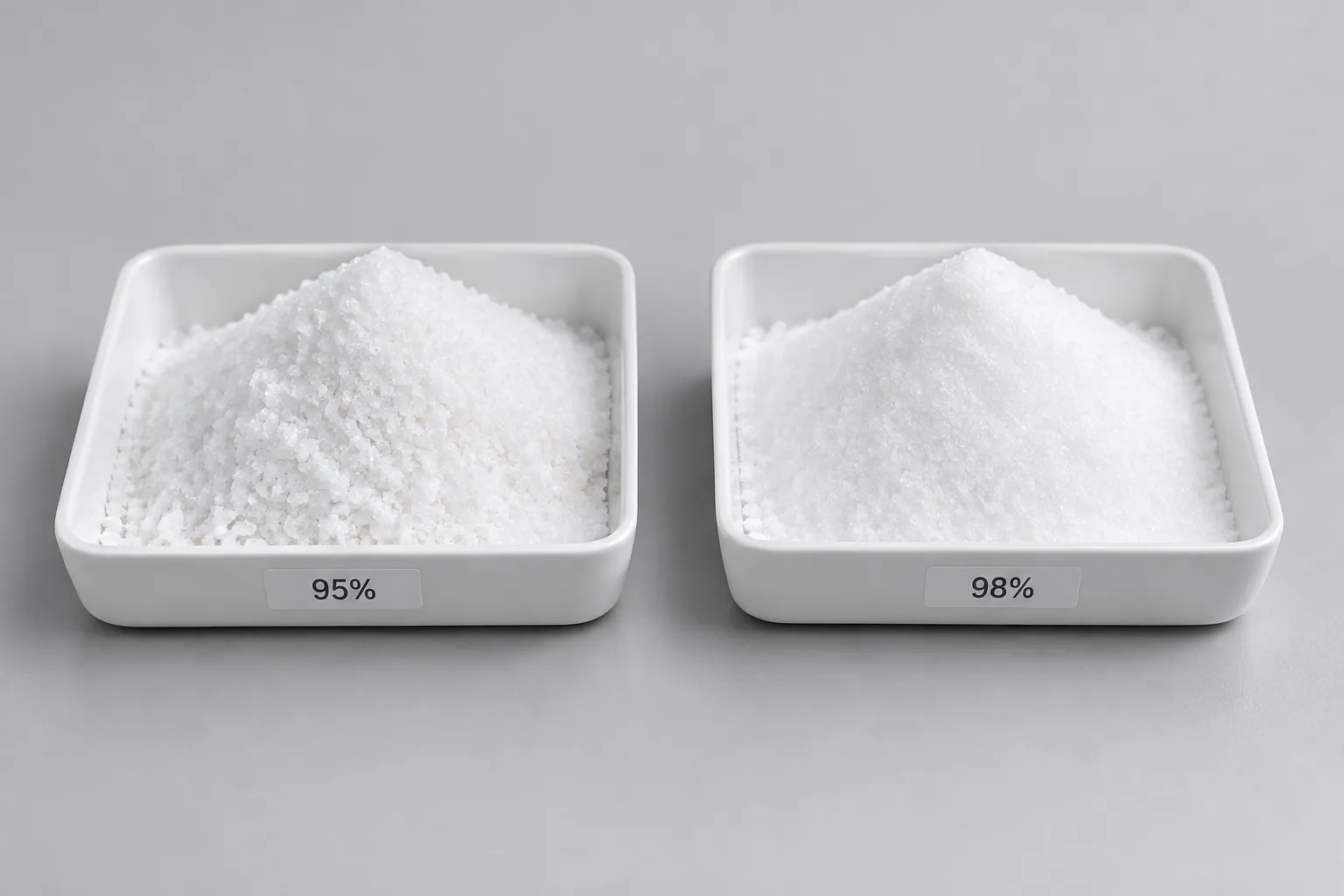
95% Tech Grade vs 98% Mono Grade: What Actually Differs
Selecting between pentaerythritol 95% vs 98% (CAS 115-77-5) directly impacts synthesis kinetics, resin structure, and total procurement spend. While both grades supply the core neo-polyol backbone, the 3% difference in nominal purity fundamentally changes how each batch behaves during esterification and polymer processing.
Assay, by-products, and why “percent” is not the whole story
The label percentage indicates monopentaerythritol purity, but the secondary components define actual process performance:
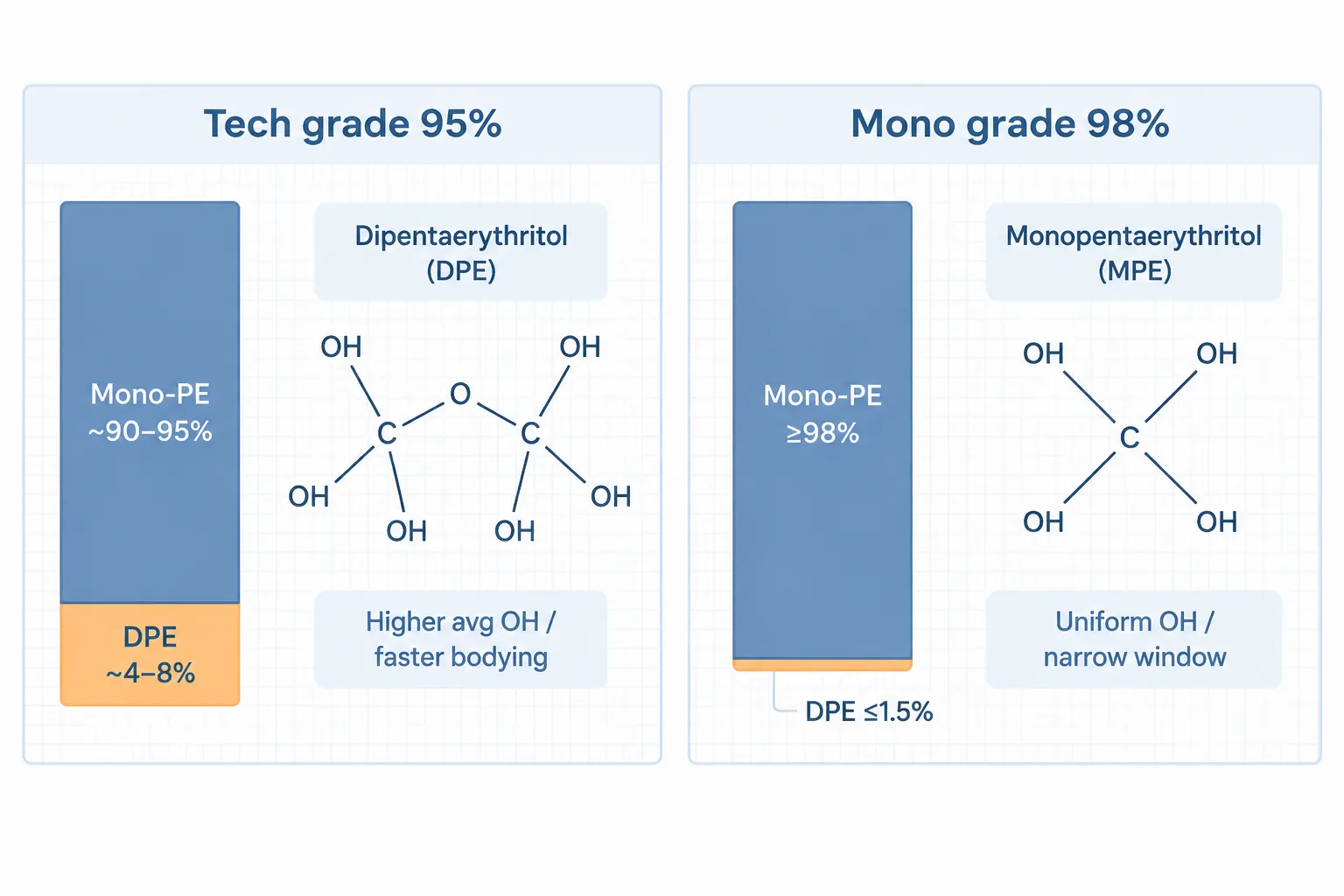
- Technical Grade (95%): Contains approximately 88% to 95% monopentaerythritol, with the balance consisting primarily of dipentaerythritol (DPE) and minor tripentaerythritol fractions, alongside trace formals. Because DPE possesses six hydroxyl groups, tech grade carries higher average hydroxyl functionality, which accelerates crosslinking and molecular weight buildup.
- Mono Grade (98%): Delivers a minimum 98% monopentaerythritol assay with negligible DPE fractions. It offers an exceptionally uniform hydroxyl value, a sharp melting point (typically 255°C–260°C), and ultra-low ash and moisture contents.
| Parameter | Technical Grade (95%) | Mono Grade (98%) |
|---|---|---|
| Monopentaerythritol Assay | 90.0% – 95.0% | ≥ 98.0% |
| Dipentaerythritol Content | 4.0% – 8.0% | ≤ 1.5% |
| Hydroxyl Content | ~48.5% – 49.5% | ≥ 49.5% |
| Melting Point Range | ~240°C – 250°C | ~255°C – 260°C |
| Primary Advantage | Cost efficiency, faster bodying | Low color, narrow reactivity window |
Typical use cases for Tech Grade (cost-sensitive resins and adhesives)
Technical grade pentaerythritol is the global industry benchmark for high-volume, cost-driven polymer applications where slight crosslinking acceleration is beneficial:
- Standard Alkyd Resins: Serves as the primary polyol for architectural paints, machinery primers, and standard industrial enamels. The native DPE content aids rapid viscosity build.
- Rosin Esters: Essential raw material for producing modified rosin resins used in printing inks, hot-melt adhesives, and pressure-sensitive adhesives.
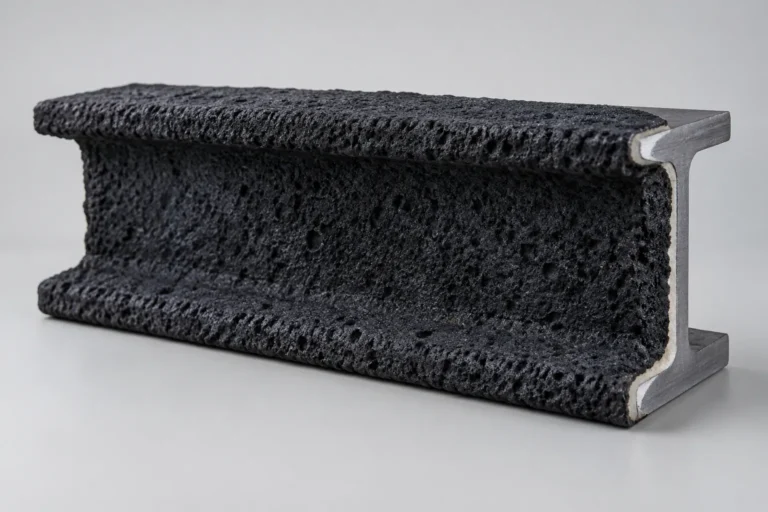
- Intumescent Coatings: Acts as an efficient carbonific char-forming agent (carbon donor) in fire-retardant paint formulations.
- Synthetic Drying Oils: Supports rapid dry-time profiles in standard industrial air-dry finishes.
When Mono Grade is the safer default (clear coatings, lubricants, tight specs)
Mono grade pentaerythritol is essential when process tolerances are narrow, premature gelation risks must be eliminated, and optical clarity is paramount:
- Synthetic Polyol Ester Lubricants: Preferred for manufacturing refrigeration lubricants, biodegradable hydraulic fluids, and aviation turbine oils requiring exact viscosity indexes and thermal-oxidative stability.
- Radiation-Curing Monomers: Forms the base for pentaerythritol triacrylate (PETA) and tetraacrylate (PETTA) monomers used in UV-curable inks and overprint varnishes.
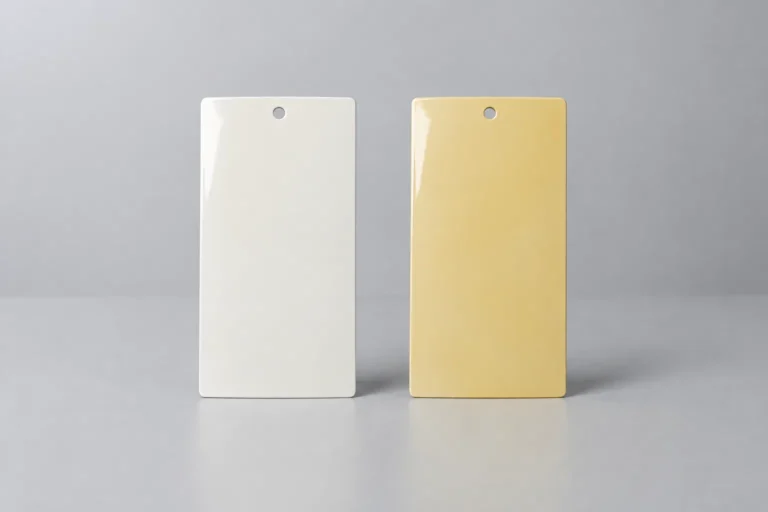
- High-End Clear Coats and Finishes: Prevents resin discoloration, delivering a low Gardner color rating for automotive finishes and pale baking enamels.
- Low-Polydispersity Polyesters: Enables tight control over end-point acid values and molecular weight distribution in automated, closed-loop batch reactors.
Side-by-Side Buying Comparison: Pentaerythritol 95% vs 98%
Choosing between technical grade pentaerythritol and monopentaerythritol directly affects both the production floor and the procurement budget. A pure unit price comparison rarely tells the whole story once processing behavior, yield, and consistency enter the picture.
| Parameter | Technical Grade (95%) | Mono Grade (98%) | Impact on Procurement & Plant |
|---|---|---|---|
| Typical Assay | ~90%–95% mono-PE | ≥ 98% mono-PE | Higher purity yields uniform polymer chains |
| Dipentaerythritol Content | Up to 5%–10% | Trace (< 1.5%–2%) | Higher DPE increases branching and viscosity |
| Melting Point | Lower, wider range | Sharp, higher range | Affects kettle heat-up time and dissolution |
| Batch Consistency | Moderate | Very High | 98% prevents unplanned gelation risks |
| Color Impact | Acceptable for dark/industrial | Exceptional clarity | 98% is critical for clear coats and light resins |
| Initial Purchase Cost | Lower per metric ton | Higher per metric ton | 95% cuts upfront spend; 98% cuts QA waste |
Performance and Process Risk in Alkyd and Polyester Cook
The main divergence between pentaerythritol 95% and 98% during an alkyd or polyester cook comes down to crosslinking control:
- Viscosity build-up: The built-in dipentaerythritol in the 95% grade carries higher hydroxyl functionality, causing viscosity to climb faster.
- Gelation hazards: If reactor temperature and acid value are not strictly monitored, 95% tech grade runs a higher risk of premature batch gelation.
- Process repeatability: 98% mono grade provides a predictable reaction window. The cook runs smoother with fewer kettle adjustments, making it the safer route for automated, large-scale production cycles.
Color, Moisture, and Ash: What to Ask on the TDS and COA
When qualifying shipments, review the technical data sheet (TDS) and certificate of analysis (COA) for three critical indicators:
- Color (Gardner / APHA): High-purity 98% PE yields low initial Gardner numbers and resists yellowing during high-temperature esterification. Ask for APHA test numbers if producing clear varnishes or white enamels.
- Moisture Content: Excess moisture wastes heat, causes foaming in the resin kettle, and alters reaction stoichiometry. Keep moisture specifications as low as possible on the COA.
- Ash Content (Sulfate Ash): Residual salts catalyze unwanted side reactions and degrade the electrical and corrosion resistance of finished coatings. Verify that ash limits remain within minimal, tight tolerances.
Total Cost of Ownership, Not Just Price per Ton
Focusing solely on price per ton often leads to hidden factory expenses:
- Rework and cycle times: A cheaper 95% lot that extends cook times by two hours or leads to off-spec viscosity quickly erodes initial purchase savings.
- Filtration and scrap: Lower purity lots can leave insoluble residues, requiring frequent filter bag changes and generating higher product waste.
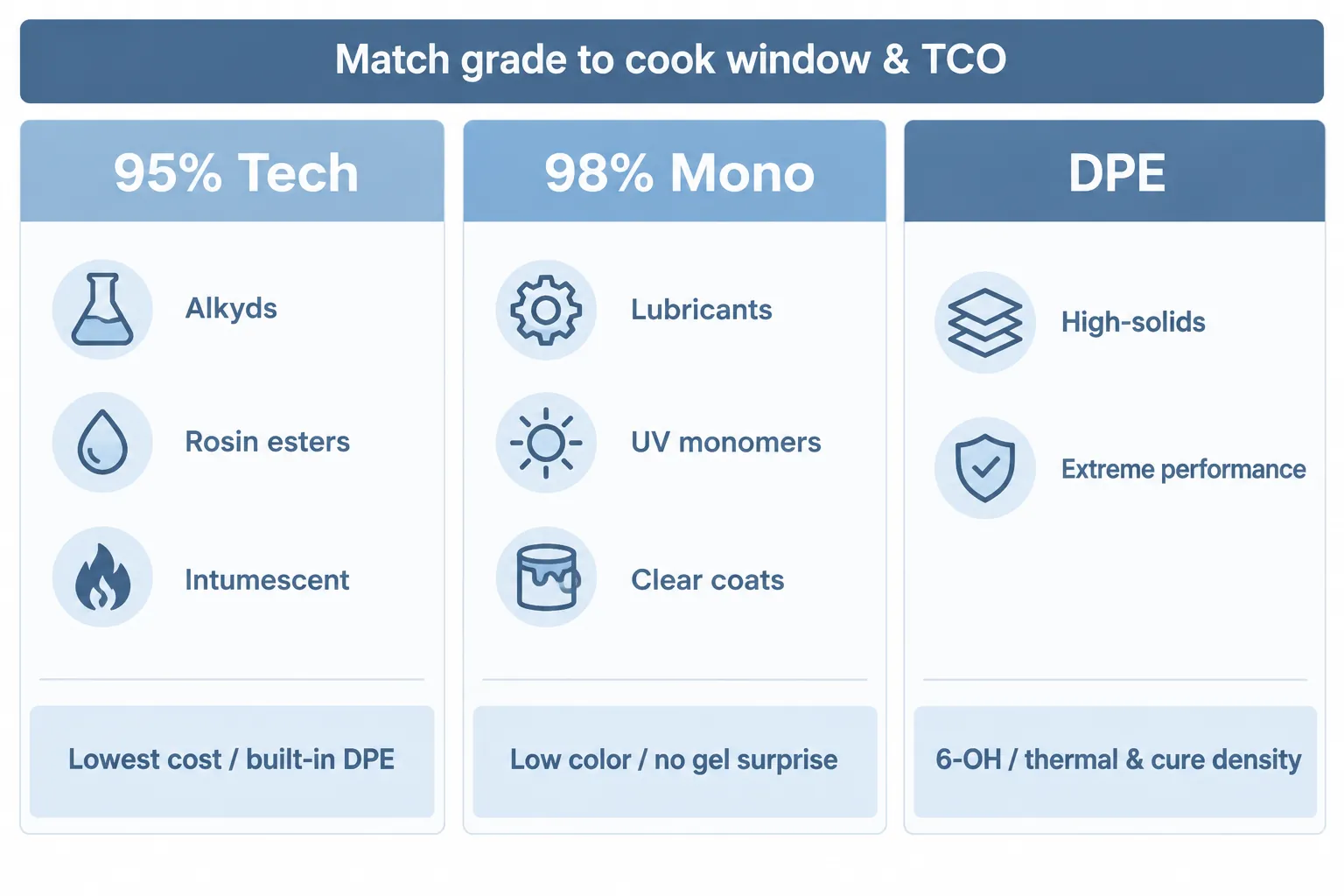
- Application targets: Reserve 95% tech grade for standard architectural paints, industrial primers, and cost-sensitive adhesives. Use 98% mono grade for premium automotive finishes, radiation-curing monomers, and synthetic lubricants where batch failure is never an option.
Is Dipentaerythritol (DPE) Worth Buying?
When weighing pentaerythritol 95% vs 98%, buyers often ask if stepping up to pure dipentaerythritol (DPE) makes financial and technical sense. DPE costs significantly more per ton than standard monopentaerythritol, but it completely changes the performance profile of your resin formulations.
What DPE adds (higher OH functionality, branching) versus mono-PE
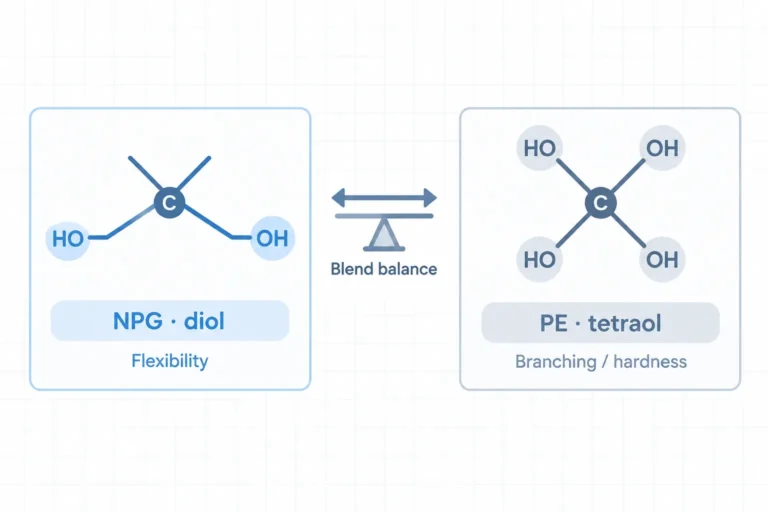
Standard monopentaerythritol carries four hydroxyl (-OH) groups per molecule. DPE is an ether-linked dimer that delivers six active hydroxyl groups, which dramatically shifts how the molecule behaves during synthesis:
- Dense molecular cross-linking: Six reactive sites yield a tighter, more resilient polymer network than four-functional mono-PE.
- Higher thermal and oxidation stability: Resins cooked with a DPE polyol backbone resist yellowing, thermal degradation, and heat stress.
- Superior film hardness and chemical resistance: Finished coatings gain improved barrier performance against solvents, moisture, and mechanical abrasion.
- Accelerated cure response: Formulations reach dry-through faster, reducing oven times in industrial baking finishes.
When DPE pays off: high-solids/VOC-lean alkyds and specialty systems
We find that investing in dedicated DPE pays off when formulation parameters leave no room for compromise:
- High-solids, low-VOC alkyd resins: Tighter environmental rules demand lower solvent content. DPE lets you build structured, highly branched polymers with low intrinsic viscosity, reducing solvent demand while preserving film build.
- Synthetic lubricant esters: Formulating polyol esters for aviation turbines, refrigeration systems, and extreme-pressure industrial greases requires the high flash point and shear stability that only a six-functional polyol provides.
- UV-curable acrylate monomers: DPE is the core building block for dipentaerythritol hexaacrylate (DPHA), the benchmark monomer for scratch-resistant optical and electronics clearcoats.
- Premium intumescent coatings: In critical fire-retardant systems, pure DPE acts as an ultra-efficient carbonific agent, producing a denser, longer-lasting protective char layer.
When DPE is usually not worth it: general Tech PE already contains some di-PE
Pure DPE is often an unnecessary expense if you are manufacturing standard industrial coatings or basic resin derivatives.
When evaluating pentaerythritol 95% vs 98%, remember that 95% technical grade pentaerythritol already naturally carries 4% to 8% dipentaerythritol as a by-product of the synthesis process. For conventional medium- and long-oil architectural alkyds, offset printing inks, and standard rosin ester production, that built-in di-PE content gives you all the branching and bodying action you need without the premium price tag of isolated DPE. Paying for pure DPE in these commodity systems simply adds overhead without delivering a noticeable return on product performance.
Practical Buying Recommendations
Choosing between pentaerythritol 95% vs 98%—or stepping up to dipentaerythritol—comes down to your formulation window, processing limits, and target unit economics. We look at procurement through both raw material cost and operational reliability.
| Application Goal | Recommended Grade | Critical Deciding Metric |
|---|---|---|
| Standard industrial alkyds, architectural paints, rosin esters | 95% Tech Grade | Lowest cost per ton, acceptable broad melting range |
| Intumescent fire-retardant coatings | 95% Tech Grade | Higher natural dipentaerythritol content acts as a superior carbonific agent |
| Synthetic lubricant polyol esters, UV monomers, clear finishes | 98% Mono Grade | Low color, narrow boiling/reaction window, zero batch gelation |
| High-solids, low-VOC specialty resins and aviation lubricants | Dipentaerythritol (DPE) | 6-OH functionality, high thermal resistance, rapid cure density |
Choose 95% Tech Grade if…
- Cost efficiency drives your formulation: For standard architectural paints, medium-oil and long-oil alkyd resin polyol cooks, technical grade pentaerythritol gives you dependable performance at a lower baseline price.
- You manufacture rosin ester raw materials: The reaction tolerates minor oligomers, making the higher purity margin an unnecessary expense.
- You produce intumescent fireproofing coatings: Technical grade inherently contains 4% to 5% di-PE, which enhances char formation and expands the protective foam layer without paying specialty polyol premiums.
- Slight cook adjustments are standard in your plant: Your operators can manage the wider melting range without risking batch-to-batch inconsistencies.
Choose 98% Mono Grade if…
- Color control is non-negotiable: High-purity monopentaerythritol yields minimal color formation during esterification, making it the right fit for water-white clear coatings, pale varnishes, and high-end automotive resins.
- You synthesize synthetic lubricant esters: Polyol ester base oils for refrigeration compressors, automotive fluids, and turbines require exact stoichiometry. Even minor secondary polyols will distort the viscosity profile and thermal-oxidative stability.
- You require narrow gel-point margins: In tight polyester or acrylic resin cooks, the low dimer content in 98% Mono Grade (CAS 115-77-5) protects your reactors from unexpected viscosity spikes or premature crosslinking.
- Consistent batch turnaround times matter: Standardized hydroxyl values mean reproducible cook cycles and less operator intervention per lot.
Add or switch to DPE if…
- You are developing high solids alkyd or VOC-compliant coatings: When you need to cut solvent volumes without compromising film build, DPE polyol provides the branching needed for ultra-low viscosity at lower solvent ratios.
- Your systems require extreme scratch and chemical resistance: The six reactive hydroxyl groups create tightly woven polymer networks, significantly upgrading film hardness over mono-PE systems.
- High-temperature stability is critical: Synthetic lubricants designed for extreme-stress industrial or aerospace environments rely on dipentaerythritol to resist oxidation and thermal breakdown.
Qualify with samples: match grade name, test methods, and lot COA
Before approving a commercial order, we always advise qualifying incoming lots against real-world production conditions rather than relying solely on product sheets:
- Compare hydroxyl values directly: Calculate your esterification ratios based on the specific hydroxyl value on the lot Certificate of Analysis (COA), not nominal label grade numbers.
- Inspect moisture and ash limits: Excess moisture wastes reaction heat and creates foaming, while residual ash can haze clear coats and destabilize lubricant shelf life.
- Run a lab-scale cook test: Test batch color after heating and verify reaction completion curves alongside acid number drawdown rates.
- Audit grade naming standards: Different suppliers classify technical grade and monopentaerythritol under slight naming variations; always cross-reference CAS 115-77-5 specs and verified monomer content before finalizing procurement contracts.
Source PE 95%, PE 98%, and DPE from a Reliable Supplier
Choosing between pentaerythritol 95% vs 98% or stepping up to dipentaerythritol (DPE) directly impacts your reactor batch cycle times, final resin color, and overall production yield. Securing these polyols requires a partner that guarantees chemistry consistency from one shipment to the next.
We maintain rigid quality standards across every grade we deliver, ensuring your formulation balances raw material savings with exact performance requirements:
- Consistent Lot Purity: Every shipment of technical grade pentaerythritol (95%) and high-purity monopentaerythritol (98%, CAS 115-77-5) undergoes strict screening for hydroxyl value, moisture, and ash limits.
- Streamlined Supply Chain: Direct manufacturing and warehousing ensure fast fulfillment for full container loads and combined shipments of polyols, including dipentaerythritol and neopentyl glycol.
- Documented Quality: Every order includes batch-matched TDS and COA documentation to eliminate batch variance before delivery reaches your unloading dock.
How Hengyou Chemical supports grade selection for coatings and resin buyers
As an Anyang-based chemical supplier of pentaerythritol grades, dipentaerythritol, neopentyl glycol, and related coating/resin raw materials for global B2B buyers, Hengyou Chemical bridges the gap between commercial cost management and technical performance.
We work directly with your procurement and formulation teams to resolve the trade-offs in pentaerythritol 95% vs 98% sourcing:
- Application-Driven Matching: We analyze your cook profile to evaluate whether an economical 95% technical grade meets your acid value targets or if a low-ash 98% mono grade is mandatory for narrow molecular weight control.
- Specialty Blends and DPE Integration: For high-solids alkyds, radiation-curing monomers, and synthetic lubricant esters, we supply pure DPE polyol and custom-balanced polyol combinations to maximize hydroxyl functionality.
- Pre-Shipment Sample Qualification: We supply verified lab samples matched to your specific test protocols, guaranteeing full alignment between pilot batch testing and bulk reactor runs.
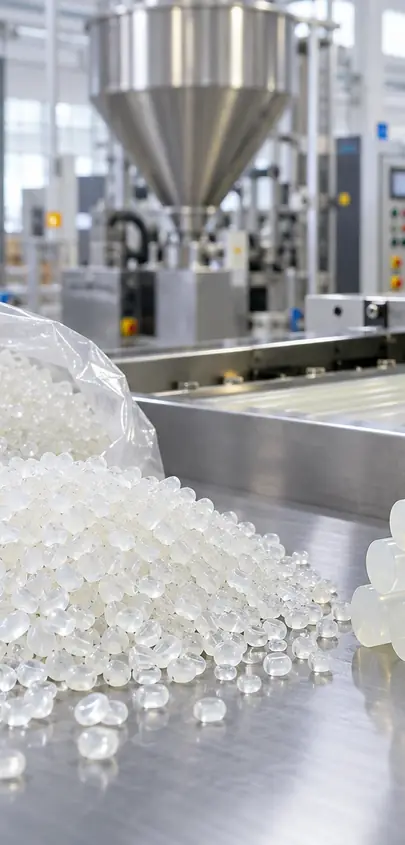
- Reliable Global Delivery: Tailored packaging solutions—from standard 25 kg multi-wall bags to 1,000 kg moisture-resistant bulk bags—keep raw materials dry and process-ready across ocean transit.